

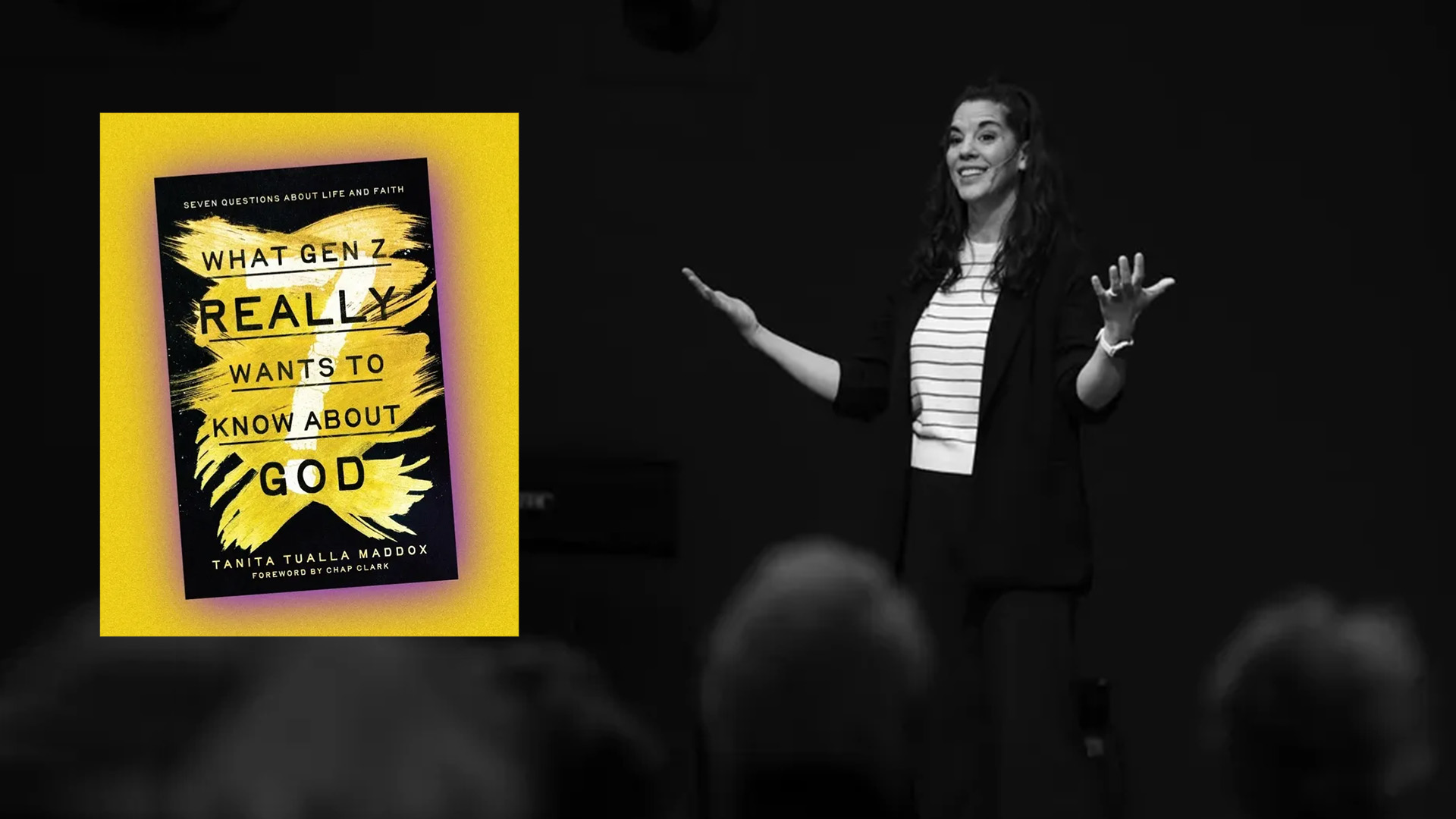
An Interview with Gen Z Expert, Dr. Tanita Tualla Maddox
Gen Z is asking big questions about life, purpose, and faith — and they’re not afraid to be honest about it. In her book What Gen Z Really Wants to Know About God: Seven Questions About Life and Faith, Tanita Maddox explores the questions young people are asking today.
We sat down with her for a quick Q&A about Gen Z’s spiritual curiosity, the challenges they’re navigating in a digital world, and what gives her hope about the future of faith for this generation.
- You’ve spent over two decades in youth ministry — what’s one thing you’ve learned about Gen Z that might surprise most adults? What’s one thing that you’ve had to unlearn?
One thing I have learned about Gen Z is they have a complicated relationship with technology. I have seen many adults assume Gen Zers love their phones and the digital world. In reality, they were thrown into a system in which they kind of have to exist. Smartphones and social media are used for education, sports, relationships, and yes, for our churches and ministries.
However, Gen Z, more than anyone, recognizes the toxicity that exists in the world of smartphones and social media, but they also know this culture does not allow them to suddenly disconnect without there being some kind of relational fallout (as well as other kinds of fallout). What looks like addiction to most adults is really more like being trapped.
One thing I’ve had to unlearn is assuming I had authority or others’ respect simply because I’m older, educated, and have more life experience. Turns out, those don’t mean as much to Gen Z as authenticity and transparency do. While I grew up understanding hierarchical systems and views of leadership, Gen Z has flattened that hierarchy and leveled out the playing field. I’ve had to adjust and learn how to slow down, listen more, and earn the respect of young people through proximity.
- Was there a moment when you realized this book needed to exist?
I’d been doing some speaking and conducting workshops, and there was just never enough time to get to the depth of conversation these topics deserve. I was really scratching the surface in unpacking who Gen Z is and what they’re asking. This was felt by others, who said to me, “You need to write a book.” The combination of those two dynamics really led to taking the idea of writing a book seriously.
- In your research, what are the biggest misconceptions older generations have about Gen Z’s approach to spirituality and faith?
Any assumption or idea older generations have about Gen Z’s spirituality and faith that are formed at a distance is probably a misconception. Too many headlines are forming our assumptions about Gen Z’s spiritual life, and headlines change quickly.
Headlines can make us think we know what’s going on with Gen Z’s spirituality and faith, but headlines are often misleading, overgeneralized, and shallow. One of the biggest misconceptions about Gen Z is that their spirituality and faith, and interest in such things, can be measured by attendance at religious events and services. There are so many faith resources online in podcasts, studies, sermons, and digital discipline plans.
Gen Z may be showing up in other spaces. Attendance doesn’t tell the whole story; it only measures who showed up. Attendance is not the whole story to anyone’s spirituality and faith. One Gen Zer recently shared with me, “Just because we act like we aren’t interested, or aren’t even there, doesn’t mean we aren’t interested.” Gen Z is full of deep thinkers and intentional discerners. They want to know what is really true before they risk having hope.
- Gen Z often struggles with the question, “Am I enough?” Why do you think this question resonates so deeply with them?
We may not realize that Gen Z has been surrounded by a couple of messages that may have started in the digital space but bled into real life as Gen Z was coming of age:
You are not enough (to be loved or valued): There is always someone smarter, stronger, better looking, more athletic, more talented, more creative, and so on, and so on. The digital world screamed at our young people to prove they mattered in the world, while providing metrics to measure their worth.
The RELATE Project found that 41% of Gen Zers globally were not confident they were worthy to be loved (Note: this isn’t about whether or not they were loved, but if they were confident they were worthy of love). So, when our Gen Zers look at us and wonder whether they are enough, it is because they have been told they are not.
There is no room for error: Gen Z came of age when “cancel culture” or “callout culture” demonstrated that any mistake could be dug up and displayed publicly, resulting in relational consequences, professional consequences, and public shame. It wasn’t only about sharing or posting the “wrong” thing, but also asking the wrong question, or even not saying anything. Gen Z could not make a single move without being scrutinized.
At a time in their development when young people are supposed to ask questions, learn from mistakes, and try and fail, they are told to be perfect. This pressed Gen Z into wondering when they would be enough.
It’s important to understand this context when we share the gospel, or we risk reiterating messages the world is using to tear the next generation down.
- How do social media and digital culture influence Gen Z’s questions about God and meaning?
This is like asking how the sun impacts how the grass grows. I’m not sure the impact of social media and digital culture on Gen Z’s questions about life and faith can be overstated. The digital space fostered a culture that surrounded Gen Z as they grew up. Social media and the digital culture bled into the real, physical world while simultaneously forming this cultural moment.
Digital and social media exposed them to others’ suffering and prompted Gen Z to ask if God could see what was happening, if it mattered to him, and if he was going to do anything about it. It invited comparison on a global scale and provided a method for young people’s value to be measured through likes, comments, and shares. It fostered a longing for Gen Zers to know when they would be enough to be loved and valued.
It provided definitions for truth, acceptance, safety, and love, many of which do not align with how God defines these ideas within the Bible.
- Despite the challenges Gen Z faces, what gives you hope about their spiritual hunger and future faith?
The next generation should always remind us to hope. They are a generation full of future adventures, endless potential, and new thinkers. They are so deeply aware the world is lying to them, stealing from them, and trying to destroy them. We don’t have to convince Gen Z of that; they are well aware.
They have a choice as they move into adulthood. They can give up in discouragement and watch the world keep turning, or they can put their foot down and say, “Enough!” They can declare the justice and mercy of God in a new way. They recognize sin in the world and long for things to be set right.
They will likely not talk about Jesus as their homeboy (as the Millennial T-shirts did), but about a powerful and trustworthy God who will set things right.
- For parents and youth leaders who want to connect with Gen Z but feel unsure where to start, what’s one practical shift they can make in today’s digital, anxious culture?
Foster curiosity. You’re entering a culture that’s not your own, and any time we do this, curiosity serves us well. We’re all learning to listen in new ways as Gen Z has their own generational communication style.
We can start by asking questions:
- What do you wish people my age understood about being your age?
- Will you send me a playlist you are listening to right now?
- On a scale of 1-10, how is your mental health today? Why that number?
- Send me a gif or meme that made you laugh recently.
- How do you know you can trust someone?
- On a scale of 1-10, how well do you feel like I listen? What would move it up one number?
Each of these questions provide different glimpses into a Gen Zer’s life. They vary in risk of vulnerability and communication style, but they all crack the door open to catch a glimpse of what our Gen Zers experience or value.