
This is the final part of a conversation with Kimberly Nollan, Young Life’s director of Research and Evaluation, and Tiffani Hutton, Young Life’s research analyst, to discuss what the latest research from our Global RELATE project tells us about the lives, faith, and experiences of the kids we serve.
Here’s where you can read part 1 of the conversation.
Here’s where you can read part 2 of the conversation.
Only 28% of kids say they talk to trusted adults about faith or spirituality — the lowest topic on the list, compared to 59% for future/goals and 58% for school. In Young Life, Campaigners is where that conversation is supposed to happen.
Why is faith the hardest topic to get to, and what does that mean for how adults should approach it?
Tiffani: Faith is deeply personal, so it makes sense that it may be one of the harder topics for young people to talk about with an adult. That doesn’t mean they aren’t interested in it — it just means it takes more trust to talk about openly. What we heard in the focus groups was that faith often grows through relationships: through discipleship, mentors, and communities where young people feel safe enough to ask questions and share what they’re experiencing. We also heard that hardship is often what deepens faith the most, which is one more reason presence matters — you can’t always predict when that conversation will happen.
For leaders, I think that means we can’t rush the relationship just to get to a faith conversation. We have to build trust first. Faith also has to be modeled as something actively lived — through how we listen, how we respond to questions, and how we walk alongside young people in everyday life.
Focus groups describe Gen Z’s faith as “relational, practical, embodied, and tested” rather than inherited. One Indian youth leader put it as, “They will question it, they will ask it, they will try it … only then do we think we can practice it.” What does that mean for how an adult should handle doubt, versus how past generations might have approached it?
Kim: I think past generations used apologetics to address doubt. Based on this quote, I think it means building a space where we can voice and discuss our doubts is critical. Adults don’t have to be experts at apologetics or faith. They do need to be curious, model good listening, and create a space where people can wrestle with doubts.
Forty-one percent of Gen Zers say AI is a reliable source for spiritual questions, and that number is highest among the youngest teens.
New Barna research this year found that while most Christian teens attend a youth group, only 18% show signs of holistic, active faith — and the teens with the most resilient faith are the ones in environments where “doubt is welcomed, questions are taken seriously.” That’s strikingly close to what RELATE’s own focus groups found about Gen Z’s faith needing to be “tested” before it’s owned. What does a good Bible study (we hope like Young Life’s Campaigners) get right structurally that helps this?
Tiffani: I think one of the things a good Bible study gets right is making room for doubt as part of the process, not a detour from it. Our focus groups showed that young people want to ask questions, test what they believe, and work through doubt before they’ll call a faith their own, rather than simply inheriting someone else’s.
In some countries, we also saw young people moving away from simply adopting the beliefs of their families, and toward exploring faith for themselves. Campaigners, in Young Life, creates space for that — not just to question, but to actively grow through Scripture, conversation, prayer, and service alongside other people doing the same thing.
Again, adults don’t have to have a perfect answer for every question. They can be curious, listen well, and model what it looks like to wrestle honestly with faith while remaining in relationship. Doubt doesn’t have to be something we rush to resolve; it can be part of how young people develop a faith that becomes their own.
Forty-one percent of Gen Zers say AI is a reliable source for spiritual questions, and that number is highest among the youngest teens. If a 13-year-old is asking ChatGPT about God, what’s the honest, non-alarmist thing a parent or leader should say — and what’s Campaigners’ actual advantage here that AI can’t replicate?
Kim: I think a parent or leader could invite the child to ask Chat GPT or another AI tool about God together, then talk about what pops up — also together. Have a conversation about what is true about what AI said and what seems off. Modeling how to be critical thinkers and consumers of information together is an important skill for everyone to practice and young people to learn.
In Campaigners, there will naturally be different opinions and experiences of the participants that can be shared. These differences could lead to lively conversation — and teach skills on how to remain in relationship even when there are disagreements. AI tends to be agreeable, and also come across as the authority, leaving little room for push back. It’s OK to not come to consensus and it’s OK to change your mind. It’s OK not to tie everything up in a tidy bow.
Thirty-five percent of stressed-out teens say they’d rather talk to an AI companion than a person, and 60% of kids with an AI companion say they’re more comfortable with it than some friends or family. One feature of Young Life camp is face-to-face, unmediated interaction for a week straight. What have you seen happen to a kid’s relational skills or confidence after that kind of immersion?
Kim: I think some kids go to camp specifically to build relationships. At camp, one has to work through awkward silences and miscommunications. They learn skills. They see relationship skills modeled by others at camp.
If a parent has one honest conversation with their kid this week based on this data, what should they ask — and what should they be ready to hear?
Tiffani: I would start with a really simple question: “How can I listen to you better?”
Young people consistently told us that they want people who give them their full attention, listen without immediately judging or trying to fix things, and can be trusted with what they share — who will allow them to be their own storytellers.
I think parents should be ready to hear an answer that may be uncomfortable or surprising — and resist the urge to immediately explain or defend themselves. Sometimes the most important thing you can do is listen and show your child that what they have to say matters.
RELATE’s advice to youth workers is “redirect, rather than condemn” when it comes to AI companions and tech overuse. What does that look like in someone’s house, practically — when do you push back on a habit versus just stay curious about it?
Kim: I think it means asking questions about what your kid is using AI for and then asking questions that will help your kid ask questions about what AI shared.
The reality is that many of us are using AI without even realizing it. Helping our kids be aware of how they’re using AI would be beneficial. Have discussions about how much AI use is useful, and how much we need to experience life in real life, and not online with AI.

What’s one finding in this study that surprised even you — something you expected the data to say and it didn’t?
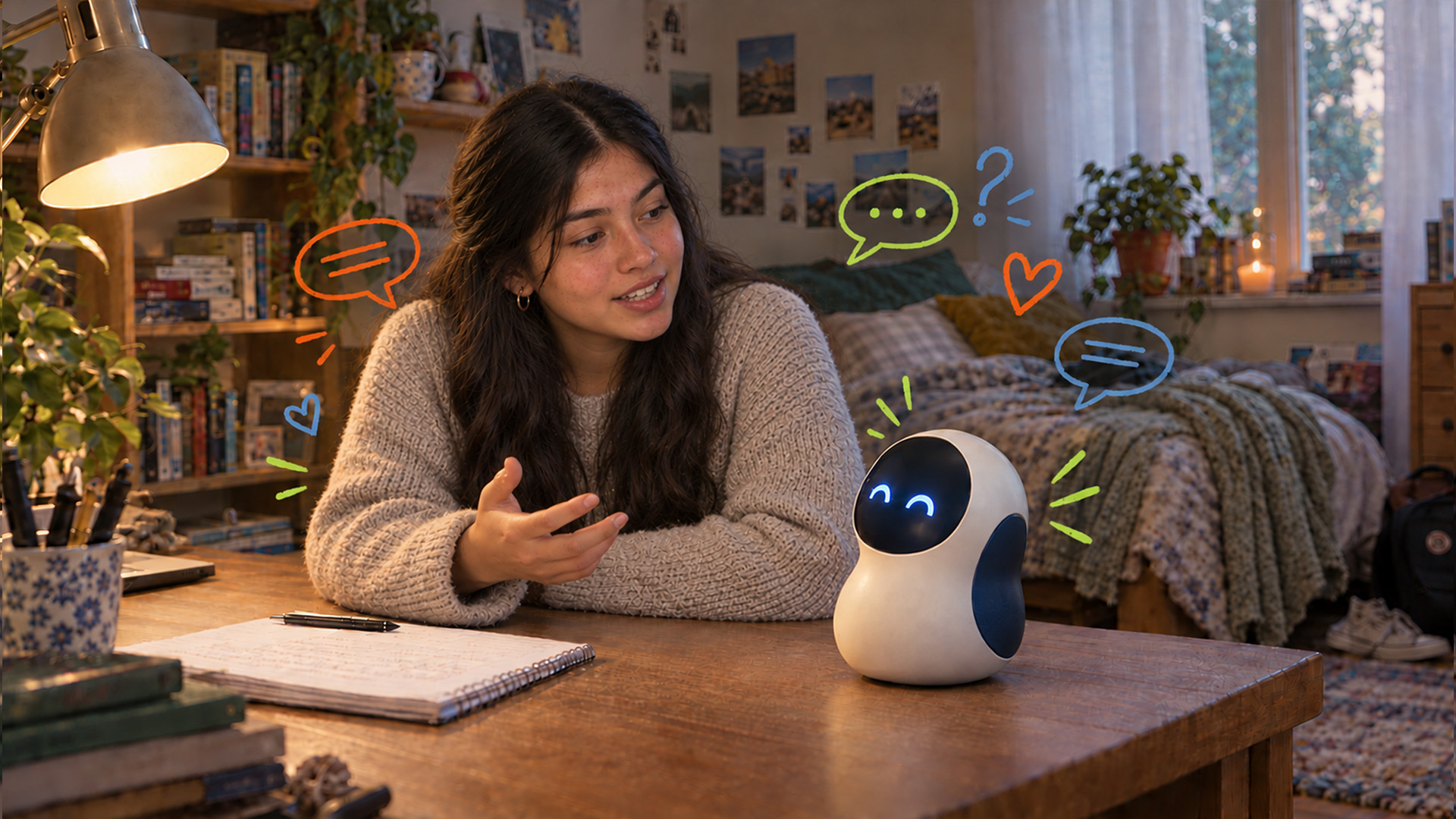
Tiffani: The AI companion finding surprised me the most. Thirty-five percent of the young people we surveyed said they have an AI companion, and it’s even higher for younger teens (13-15) at 45%.
Even more surprising was that among young people with an AI companion, 65% said they feel more comfortable talking to it than to some of their friends or family.
That finding has really stayed with me. AI can be a genuinely helpful tool (I definitely use it!), but it made me think harder about what young people might be looking for from AI that they aren’t finding in their human relationships. As AI becomes a bigger part of their lives, I don’t think the answer is simply pulling them away from it — it’s helping them navigate how to use it well, while continuing to create relationships where they feel just as safe asking questions, being vulnerable, and showing up as their whole selves.
If you had to leave parents with a single number from this entire study to carry with them, which one would it be, and why?
Kim: The number of close relationships is decreasing, yet the desire for relationship is increasing. With AI, there may be gaps in people’s relational skills that need to be filled. It is in unstructured time with others, where people are sharing experiences, listening to one another and holding what they say in confidence that relationships are built. Parents, especially parents of younger kids, should ask 1) how much unstructured time (and tech-free time) they guard in the life of their family and their kids’ lives, and 2) is it enough to let their kids learn through modeling and trial and error how to be relational with others?