


What does the latest research from our Global RELATE project tell us about the lives, faith, and experiences of the kids we serve?
In part 1 of this conversation, we sit down with Kimberly Nollan, Young Life’s director of Research and Evaluation, and Tiffani Hutton, Young Life’s research analyst, for what we’re calling The Science of Young Life.
Together, Kim and Tiffani offer a preview of our upcoming Global RELATE study and share insights from the past year of collecting and reviewing research, as well as spending countless hours listening to young people through focus groups. As they reflect on what they’ve learned, Kimberly and Tiffani explore the trends they’re seeing, the questions they’re asking, and why these insights are so vital to how we show up for and serve young people. We hope this conversation equips you to better understand the next generation — and inspires you to walk alongside them with greater empathy, curiosity, and purpose.
A focus group participant called Gen Z “a new model of Ferrari” in the report intro — fast, full of energy, but built for a world that doesn’t have the roads for them. What did that image capture that the data backed up?
Kim: It captures a profound tension. On one hand, this generation has an immense, high-performance desire to make a difference, change the world, and create a positive impact. On the other hand, they’re experiencing historically low trust in the very institutions and traditional structures that would normally allow them to do so.
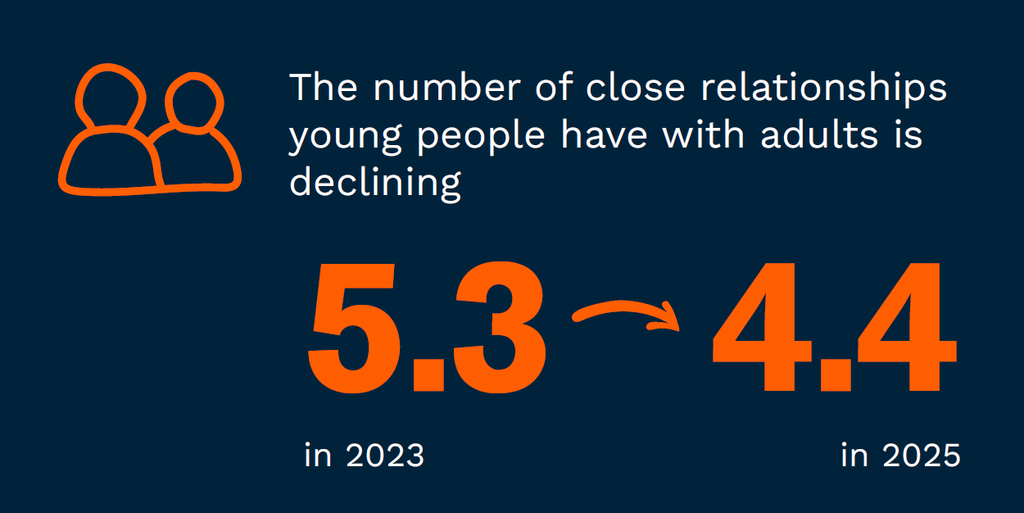
RELATE found “the average number of close relationships a young person has” dropped from 5.3 in 2023 to 4.4 in 2025. That’s a startling shift for a two-year window. What do you think is driving it, and should parents be alarmed?
Tiffani: There are a lot of things contributing to this. Culturally, there’s been a shift in how we think about connection. Social media has made follower counts, online visibility, and the influencer lifestyle (e.g., “main character energy”) a part of how young people experience relationships. It’s easier than ever to be connected to a lot of people without necessarily having close, meaningful relationships.
But our findings also show young people still want in-person connection. In fact, 64% say their preferred way to connect with friends is face-to-face. Close relationships can also be a protective factor when young people are facing other challenges. For parents, this means opening the door to opportunities for kids to spend time with friends and peers in person — giving them the time and space to build and strengthen those relationships.
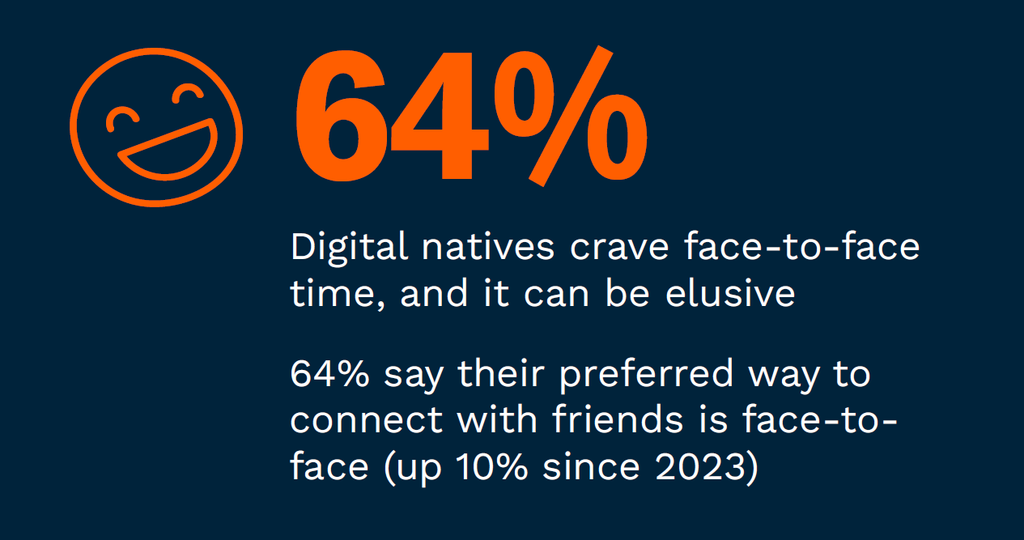
Despite that shrinking circle, 64% of teens now say face-to-face is their preferred way to connect with friends, up from 54% in 2023. That sounds like good news buried in bad news — kids want connection, they just have less of it. How should parents read that tension?
Kim: Perhaps the number of close relationships decreased because it’s generally easier — and, as this research shows, often perceived as safer — to meet virtually or by phone. But ultimately, it’s the long unstructured hangout time and shared experiences that builds relationships. It’s face-to-face conversations where you can easily signal that the person you’re talking to or listening to is valuable. It’s face-to-face conversations where you can put your phone down and establish real, durable trust. During face-to-face hangs, things also tend to come up that you might not think of or feel comfortable with sharing when you’re talking digitally or on social media. It’s good that more of our kids want face-to-face hangouts, and it’s a solvable problem that they aren’t getting as much of them as they need.
Parents need to ask: am I holding space in my child’s life for them to have unstructured time that would facilitate relationships with friends and even with themselves?
The World Health Organization’s Commission on Social Connection recently found that 13- to 17-year-olds report the highest rate of loneliness of any age group in the world — 20.9%. RELATE’s own numbers on shrinking close relationships point the same direction. Does that global loneliness data change how you’d frame RELATE’s findings for a parent who assumes their kid, specifically, is fine?
Tiffani: I think this is right in line with what we saw in our study and heard in our focus groups. Young people, particularly in some of our Western countries, described the tension of being constantly connected online while still feeling emotionally distant from others.
For parents, I think the takeaway is not to assume that because your child is always texting, on FaceTime, or interacting with friends online that they feel deeply connected. Pay attention to the quality of their relationships. Do they have people they can be vulnerable with, who really listen to them, and who consistently show up for them? Being connected and feeling connected aren’t always the same thing.
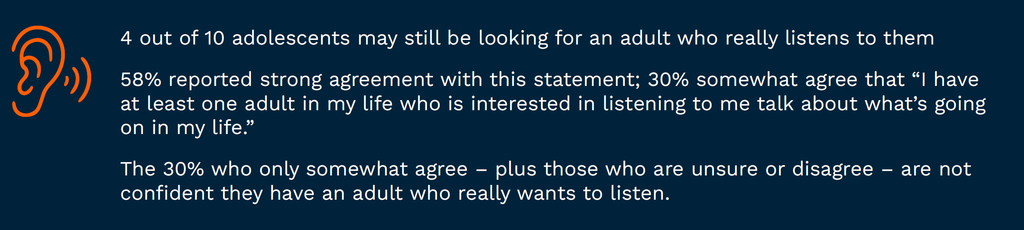
RELATE found four in 10 adolescents don’t have a consistent adult who is invested in their lives — this is “the exact gap Young Life leaders are trained to fill.” Contact work is built on showing up in a kid’s world. Why does that unscripted, low-stakes presence matter so much more than the data would predict?
Kim: I’m not sure data would predict or not predict the importance of presence. But the question about why unscripted presence is important, why showing up matters, is that it creates space of possibility. In those spaces of possibility, we can ramble, we can share our dreams, we can wonder, we have time and space to talk about the harder parts of life. We communicate by our presence that the other matters — they are worth showing up for.
One focus group teen said trust builds through “just being around” — not big gestures. A student in Zimbabwe told you: “I’m the kind of person people go to when they’re going through things, but very few people show up for me.” What does that tell parents about the kind of adult presence their kid is actually missing, even in a full house?
Tiffani: That quote points to something important: some young people have become the person others go to for support, without necessarily having someone consistently doing that for them. Even a kid who seems like they have it all together may not feel like they have a safe place to bring their own struggles.
One of the strongest themes we heard throughout the focus groups was the importance of consistency. Trust is built over time by continuing to show up, continuing to listen, and proving that you’re a safe, reliable, and loyal person. Adults can also help by modeling vulnerability themselves, being willing to sit with young people during the harder parts of life. Sometimes they need to see and feel what a safe, trusting relationship looks like before they feel comfortable opening up themselves.
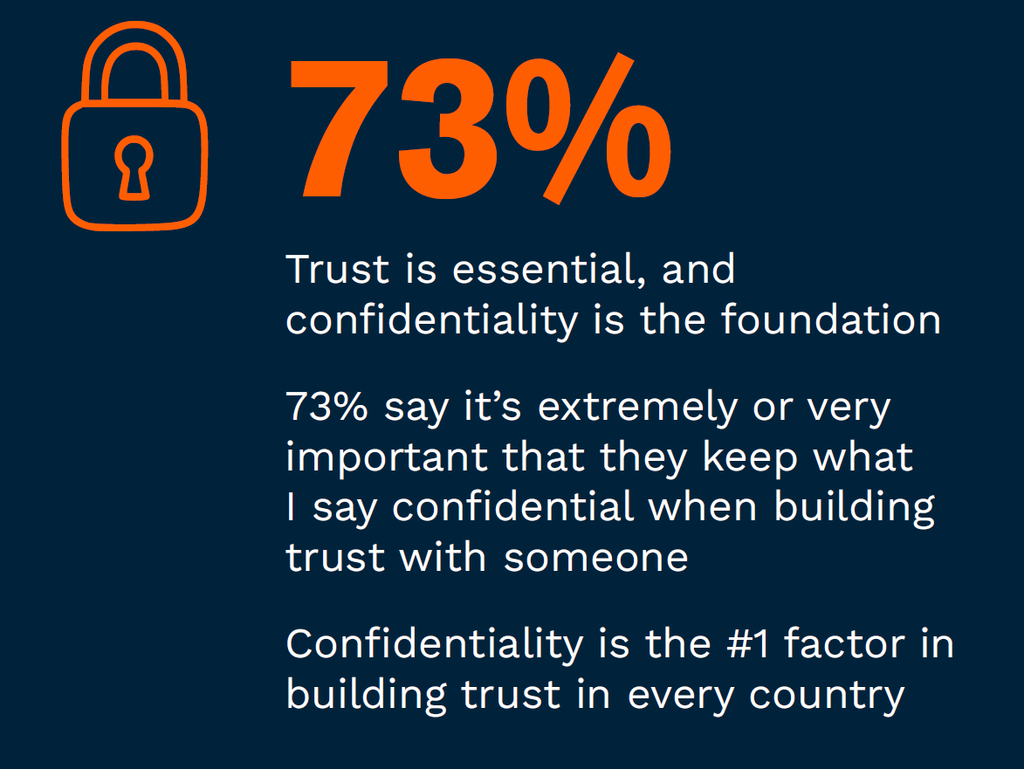
Confidentiality ranked as the #1 factor in building trust in every single country surveyed, with 73% saying it’s extremely or very important. For a parent who wants to know everything, what does this mean about how they should talk to a Young Life leader — or even a coach or teacher — who’s earning their kid’s trust?
Kim: Confidentiality for Gen Z and Alpha is more about holding someone’s story and not sharing it without permission. In a world of social media where everything posted is public, holding someone’s story is critically important. A parent needs to trust that their kid needs a space where they can build their identity, and support system, in addition to the parent. Building relationships requires confidentiality.
A parent could have a conversation with both their kid and the leader, teacher, or mentor to talk about confidentiality and how they want to handle it together. It would also mean a parent not sharing their kid’s story with the Young Life leader without asking their kid for permission — and not asking a Young Life leader to share a story their kid shared without the kid’s permission.