
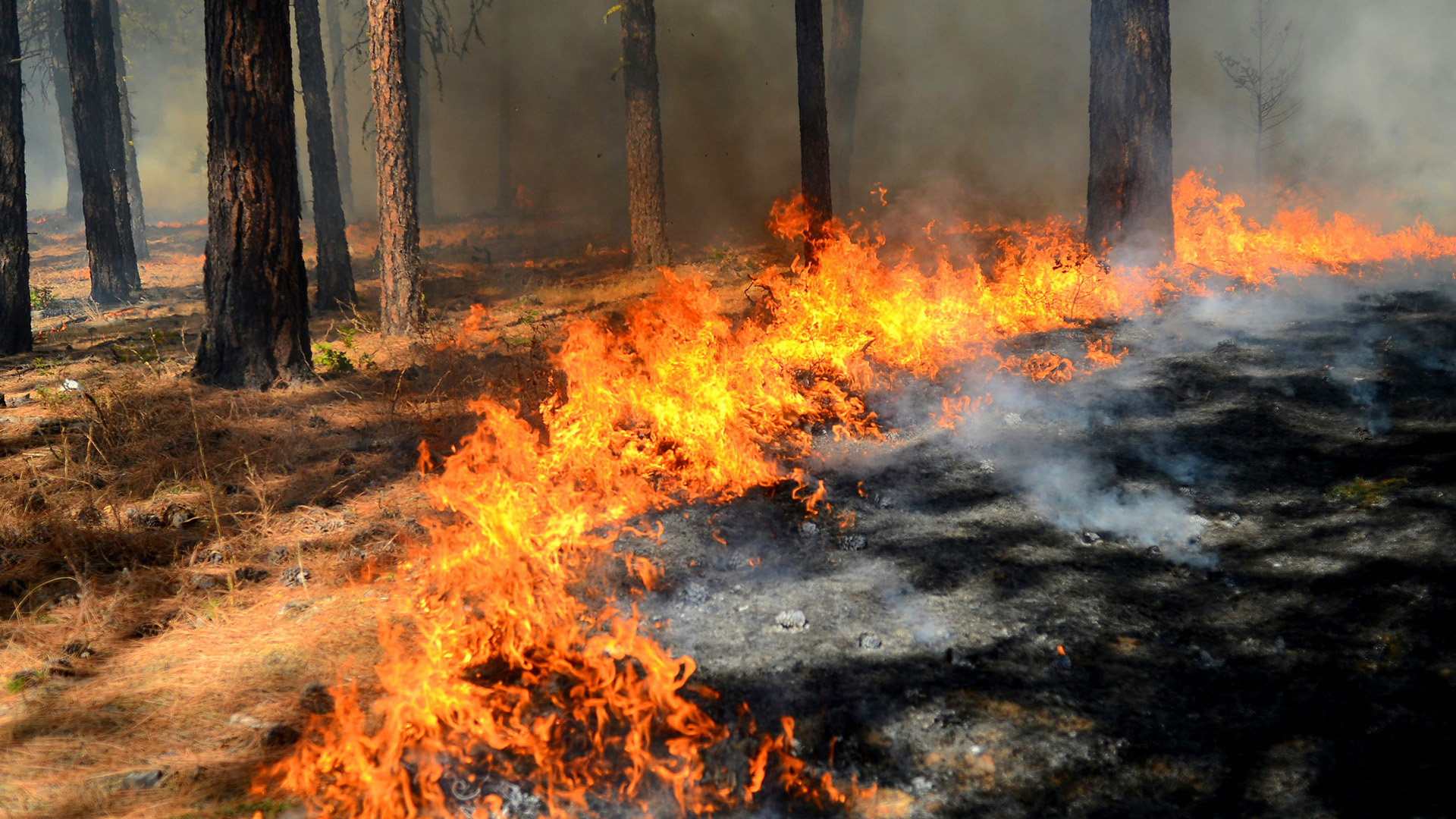
When wildfires forced evacuations and canceled the five remaining summer camp weeks between the two camps at Washington Family Ranch (WFR) in Central Oregon, Young Life leaders were faced with unexpected questions:
- What happens when the camp experience we planned is no longer possible?
- What do you do when leaders spend months fundraising, planning, and building anticipation for camp?
- How do you hold the disappointment and grief of plans abruptly changing while also trying to make the best of it?
The answer to all of the above was consistent with what Young Life leaders do every day ― We keep showing up because we know Jesus is still showing up.
Leaving Camp Early
Nearly 200 Creekside middle school campers from Gig Harbor, Washington, were among those camp groups that had to evacuate because of a fire growing rapidly due to shifting weather conditions.
Leaders had to have heartbreaking conversations with kids about leaving camp after just two days there. Kids and leaders were, of course, very sad, but on the bus ride home, something began to shift.
Instead of accepting the experience was over, leaders started making calls, dreaming and asking what might be possible.
Within 24 hours, “Creekside Continued” was taking shape.
“Creekside Continued”
When the buses arrived home, the community immediately rallied.
Parents welcomed campers with signs, food, and celebration. Volunteers transformed a local barn and property into a full-day camp experience complete with games, worship, cabin time, club, cabin Olympics, a silent disco, ice cream, and overnight lock-ins hosted by local families.
More than 200 cars arrived. Local companies, churches, and volunteers donated food and supplies, while alumni home from college served as work crew.
The entire event came together in less than a day.
And, it wasn’t simply because people were asked to help. People wanted to help.
In the words of Marshall Jamison, the area director in Gig Harbor:
“In my 19 years of Young Life staff — it was the greatest night of Kingdom community I have ever been a part of.”
What made the response remarkable was people could have stepped back. Camp had been canceled. Leaders and volunteers could have taken a break. Instead, they gave more — their time, homes, resources, and energy — so kids could still have an experience worth remembering.
And the kids noticed.
One eighth-grade girl from Gig Harbor reflected:
“I never would have chosen to come home early from camp, and I know it would have been fun if we had gotten to stay, but tonight was one of my favorite nights ever. I think if we stayed at camp all of my camp memories would be clumped together. But I will never forget this.”
Josh Powell, vice president of International Development, who offered his barn and property to the effort, reflected:
“It was a picture of Young Life at its best. A community that owns the mission. Leaders going the extra mile. Partners saying yes however they could. And the gospel being more than a talk, but a way of being loved, one that doesn’t always need a big formal stage.”
New Ways to Create Camp
Their response wasn’t about pretending the cancellation wasn’t hard. It was creating space for disappointment while also refusing to believe this is how camp would end.
And Gig Harbor wasn’t the only community that refused to let an evacuation be the end of the story.
- Chelan Valley leaders took boys to Sisters, Oregon, and then to the coast — giving some kids their first glimpse of the ocean.
- In Sunnyside, Washington, leaders from Brea/Diaz, Royal City, and Moses Lake gathered for a special dinner, pool party, and club at a supporter’s home.
- Silverton and Lewis County held clubs and showed videos from the Creekside camp speaker.
- North Idaho moved campers to Suncadia, where they continued with rafting, club, and quiet time at Tumalo Falls.
- Bothell/Woodinville created its own club experience and used a cross covered in sticky notes as a visual reminder of giving brokenness and sin to Jesus.
The details were different, but the heart was the same:
Don’t stop pursuing kids simply because the plan changed.
And, perhaps for some kids, these unexpected experiences became even more meaningful.
God Goes Beyond Our Camp Properties
One of the clearest reminders from this experience was that camp is a tool — but Jesus is who transforms lives.
When the camp property was no longer available, leaders found new ways to keep pursuing kids with the gospel. Conversations continued. Relationships deepened. Space was created for disappointment, questions, and faith.
“Camp is a great tool for leaders, but Jesus is what creates the transformation in kids’ lives.”
Jeff Huber, regional director
Even though the fires eventually canceled the remainder of the summer camping season at WFR, the kids remained and so did the leaders who loved them.
The Mission Continued
The fires demonstrate that Young Life’s mission is not dependent on a property, program, or schedule.
It is dependent on relationships — leaders who continue to show up and communities willing to say, “Yes, we’ll help.”
- A backyard became a camp property.
- A supporter’s home became a club room.
- A road trip became an opportunity for deeper conversation.
- A sticky-note-covered cross became a place to surrender brokenness.
Camp is a powerful tool, but the heart of Young Life has always been bigger than a camp property.
- It’s a leader sitting beside a kid.
- A community opening its doors.
- A volunteer saying yes.
- And Jesus meeting kids right where they are!
See How Areas Pivoted
These stories are just a glimpse of the creativity and resilience displayed by Young Life communities across the Northwest. A video created during this time captures photos and examples of how areas responded when their camp plans suddenly changed.
Watch the video to see how Young Life leaders, communities and partners continued creating meaningful experiences for kids — even when camp looked completely different than expected.