

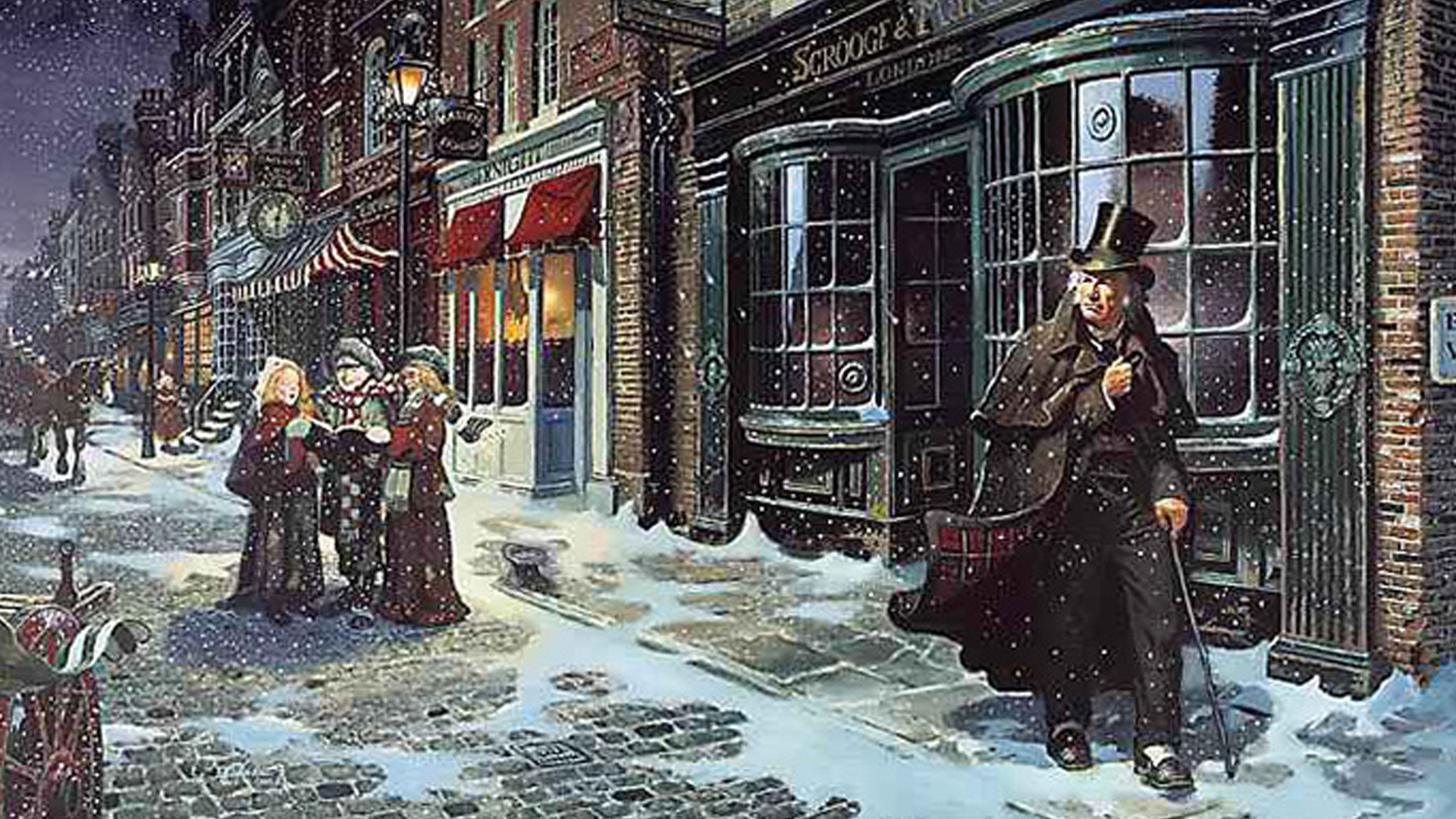
Most of us first met A Christmas Carol through a childhood favorite — the Disney version, the Muppets, maybe even the Flintstones. Others encountered it in Dickens’ original 1843 “little ghost story,” released just 10 days before Christmas 182 years ago.
The tale endures because it speaks to something deeper than Victorian London. Dickens, often called “the man who invented Christmas” (second only to Christ in shaping how the holiday is celebrated today), wove unmistakable gospel themes into a story that still convicts, comforts, and inspires.
A Christmas Carol offers more than nostalgia. It gives us a spiritual diagnostic; a picture of transformation; a reminder of what God can do with a surrendered heart.
Here are the 10 takeaways that illuminate how this classic mirrors the gospel story we celebrate at Christmas.
First, a quick synopsis
In case it’s been a while since you read the Disney version:
On Christmas Eve, the miserly Ebenezer Scrooge is visited by the ghost of his former partner, Jacob Marley. Marley warns him of three spirits who will reveal the truth about his life — past, present, and future — and who will offer him one final chance to change. Through their haunting, yet grace-filled, guidance, Scrooge confronts his past, witnesses the impact of his cruelty, and sees the bleak future awaiting him if he doesn’t change. He wakes on Christmas morning transformed. He’s joyful, generous, and newly alive.
Top 10 Gospel Truths
1. Redemption Is Possible
What draws audiences back year after year? The sheer power of watching a hardened heart soften. Scrooge is both extreme and familiar. His story reminds us: no one is beyond redemption.
“I will honour Christmas in my heart … I will not shut out the lessons that they teach!”
— Scrooge
2. Charity Reveals the Heart
The contrast between greed and generosity echoes Jesus’ warnings about wealth. Scrooge’s nephew Fred says it best about Scrooge:
“Who suffers by his ill whims? Himself, always.”
True abundance is measured by what we give.
3. Faith Expressed Through Action
Jacob Marley’s lament is a sermon in itself, as he says that his business wasn’t just making money, but caring for people:
“Mankind was my business … charity, mercy, forbearance, and benevolence were, all, my business.”
It’s James 2 in Victorian English — faith without works is dead.
4. From Death to Life
Transformation lies at the center of Christian faith. Scrooge “dies” to his former self and awakens to a new, grace-filled life. The ghosts act as prophets, revealing the truth to set him free.
And it took their death to bring about Scrooge’s life.
5. What’s in a Name?
Dickens loved symbolic names:
- Scrooge — “to grasp or squeeze”
- Cratchit — linked to crèche, the manger
- Ebenezer — a monument of remembrance
The story itself becomes an Ebenezer — a reminder of what happens when we embrace (or ignore) the call to repentance.
6. A Foreshadow of Resurrection
Tiny Tim’s survival depends on Scrooge’s transformation. In Dickens’ world, grace creates life. Change in one person ripples outward, just as living a changed and resurrected life ripples through a community.
7. A Parable for Every Generation
Like Jesus’ parables, this story wraps spiritual truth in narrative. For 180 years, people have testified that reading it altered their lives.
8. Miracles Are at the Center
Tiny Tim points directly to Jesus’ miracles:
“… to remember on Christmas Day who made lame beggars walk, and blind men see.”
The true miracle of the season is Christ himself, and Dickens’ story reminds us to hope and look for miracles.
9. Spoken Truth Leads to Freedom
Each spirit forces Scrooge to face truth he’d rather avoid. There are “severe mercies”: the mercy that has the courage to speak truly.
Conviction precedes transformation. And truth becomes the doorway to grace.
10. A Call to Care for the Vulnerable
Through the allegorical children Ignorance and Want, Dickens criticizes social indifference. The gospel echoes the same message: care for the least, the lost, the lonely.
Why This Matters for Us
It’s easy to skip ahead to Scrooge’s joyful Christmas morning —
“I am as light as a feather … as happy as an angel!”
But the story’s power lies in the disruption. The ghosts interrupt Scrooge’s comfort so he can rediscover compassion.
The same often happens in our spiritual lives.
What disruptions are you facing?
How are they inviting you to see with greater compassion?
May our hearts laugh like Scrooge’s, may our lives reflect Christ’s generosity, and may we be people through whom others encounter the hope of redemption.
Merry Christmas — and God bless us, every one!
Bonus: Fun Facts About A Christmas Carol and Dickens
- Dickens drew from his own life — especially childhood poverty — when shaping the story.
- He often explored “the death of the heart,” a spiritual numbness Scrooge embodies.
- He completed the entire novella in just six weeks, and 6,000 copies sold on day one.
- Dickens self-published it, insisting on high-end illustrations and gilded covers.
- Despite the premium look, he priced it affordably so the masses could read it.
- Dickens shaped many phrases and Christmas traditions we still use today.
- The book was also a social protest — especially against child labor.
- Since 1908, more than 45 actors have portrayed Scrooge on screen.