

Beyond the algorithm, what it really takes.
It was 7:37 p.m. on a Monday. I was onstage at Young Life club, with an itchy fake mustache barely holding on to my sweaty upper lip, when I looked up to see a student staring — not at me, but at their phone. For a brief moment, I wondered, “Why am I even doing this?” As a Young Life leader, I usually choose to dial things up to be crazier. I can keep things shorter to support the TikTok-trained attention spans of today’s young people. But when it comes to their everyday life, how do we keep them focused on what’s most important?
As a leader, culture writer, graduate student, and TikTok creator, my work lives at the intersection of faith, attention, and influence. I’m constantly wrestling with deep questions that take careful study to even attempt to answer. And when I look at the way distraction shapes the world our teens are growing up in, it’s easy to get discouraged.
200 Pings a Day
Half of teens are on social media almost constantly. School, practice, and even just hanging out with friends are interrupted by an endless barrage of notifications. According to a 2023 report from Common Sense Media, teens’ phones ping over 200 times a day. These pings beckon them to spend more and more time online, making it harder for them to pay attention in real life. You could even say this constant, low-level distraction influences them more than any single person, app, or trend.
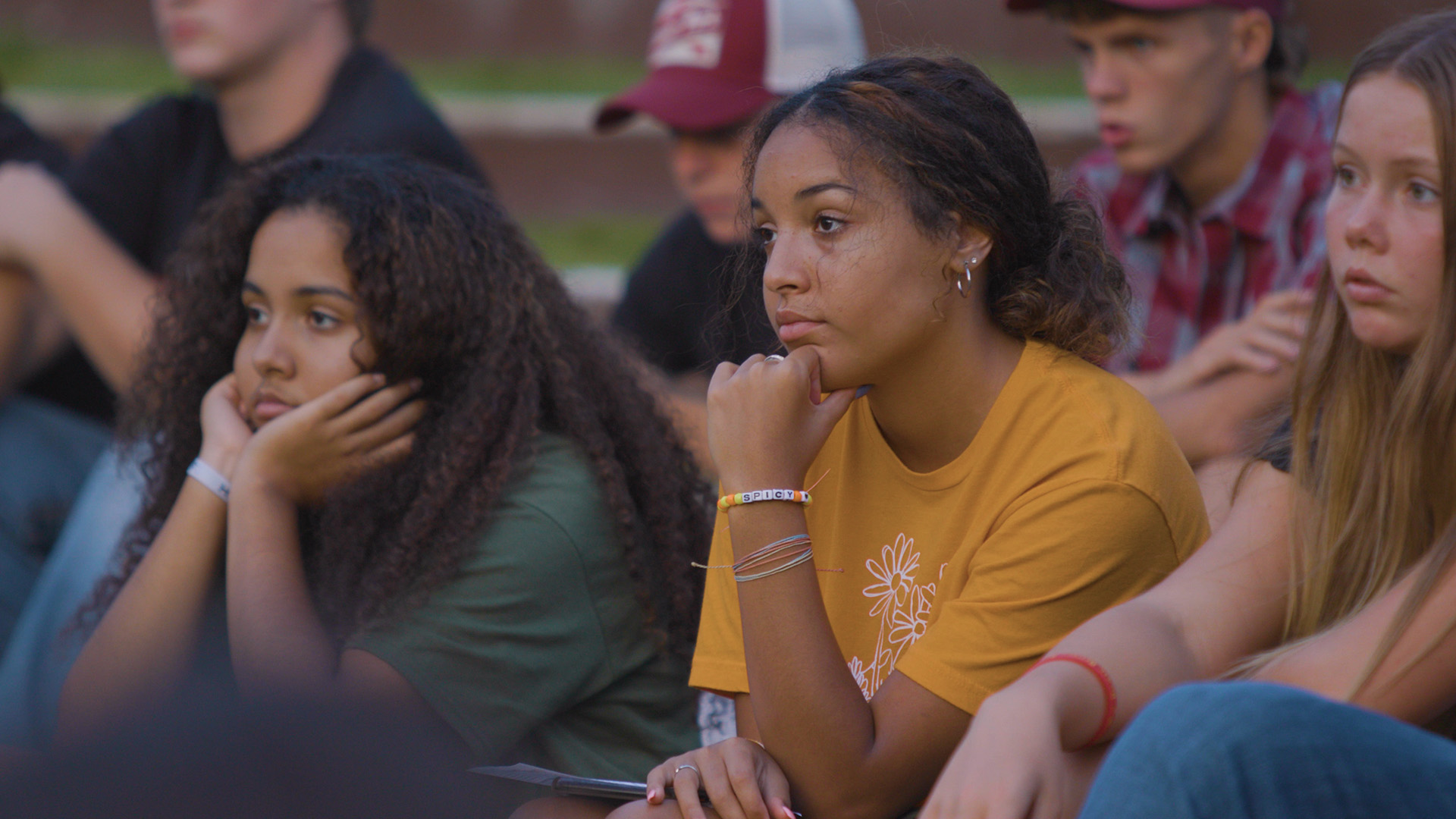
At camp, capturing students’ attention is a lot easier. Mainly because they don’t have their pesky iPhones dinging incessantly, begging for their attention, or the added pressure of surveillance (except for maybe the chance of ending up in the recap-of-the-day video shown at club). Camp is the only week of the year when my students get off the hook from the pressure to keep up with social media. It’s something we talk about, but often don’t reflect upon: how profoundly their distraction impacts their ability to engage with God, others, and themselves. What would it look like to move beyond talking about our fragmented attention and do something different? And how do we steward our influence with young people who have difficulty paying attention at all?
Even as a Gen Z digital native, I’m old enough to get nostalgic for the time before screens. While I had an iPad when I was in middle school, I can still remember life before my family had to implement the “no phones at the dinner table” rule. Gen Alpha can’t even remember life without constant digital interruptions. It’s easy to categorize Gen Alpha as disengaged, distracted “iPad kids,” but it’s actually they themselves who suffer the most from the environment this creates.
They live in a time when even the adults around them can’t go a few minutes without checking their phones. They’re receiving fragmented attention from adults, their peers, and everyone in between; it’s no wonder young people are flocking to online spaces and therapy offices to find it. They’re practically begging for someone to pay attention to them — even as their broken attention spans may frustrate adults around them.
Truly Knowing Them
A big portion of Gen Z’s and Gen Alpha’s limited attention is directed at those who do not know them at all. Influencers build parasocial relationships with their audience. These pseudo-relationships influence what teens wear, which words they use, and even how they act with their friends. This creates a situation where teens are being profoundly shaped by people who are not at all invested in their lives.
Scripture often uses the language of “knowing,” but the Hebrew or Greek understanding of knowing is less about cognition and more about “intimate relational knowledge,” according to Bible Hub. Christians today would do well to focus on cultivating this kind of knowledge, rather than scrolling on their phones to “know” something briefly, just to forget it later.
To truly know anything, or any one, takes time. The poet Mary Oliver says that, “Attention is the beginning of devotion.” Attention is the greatest gift we can give someone — but our devotion is fragile. It is easily stolen from us by algorithms crafted to manipulate our human vulnerabilities.
As I cultivate an audience on TikTok, I try not to take that attention — or the influence it breeds — for granted. It means I have to be careful not to see it as something it is not. I love making videos on social media about faith, theology, and what I’m learning in seminary. But I know the relationships I have with the girls I disciple in Young Life are not built on quick sound bites about faith. Sure, they see my videos on their FYP [For You Page] and joke about me being an “influencer,” but what I say on that platform does not witness Christ to them, because true witness is embodied.
The vulnerable questions teens used to bring to a Young Life leader or their youth group peers can now be asked, anonymously, to a chatbot. A disembodied prediction machine that will simply put together fragments of information, some good, some bad, to give an (often incoherent) answer is no substitute for a courageous conversation.
The Ministry of Presence
As discouraging as the state of attention is today, our hope is in the future. Jesus did not try to change the culture he found himself in by complaining about it or condemning it. He showed people a completely different way to live — and he led by example. The adults with real influence — the ones who will deeply impact the next generation — are the ones doing the slow work of planting seeds, even if they may not see the immediate fruit of their labor.
That slow work might look like not checking our phones during our coffee catch-up with students we disciple. Simple, but not easy. As tempting as multitasking is, it keeps us from the important posture of presence. And the ministry of presence needs to be integrated into our leadership, or we will fail at seeing the source of our students’ struggles.
Our attention spans might be “cooked,” as the kids say, but they aren’t broken beyond repair. Neuroplasticity shows us that our brains can adapt to healthier habits. Instead of trying to get your kids off their phones at club (a valiant attempt!), we can show them what a life of devotion to Christ looks like, which begins with the careful stewardship of attention. Why not start with ourselves? Perhaps, working to fix our own attention spans can be rebellious, and a unique witness to the next generation.
The youth leaders who poured into me when I was a teenager are the reason I went to Bible college, and now seminary. The way they listened to me, cared about me, and did the things I loved with me left a lifelong impact. And I’m a kid who was a believer from a young age who had loving parents. I still needed adults outside of my immediate family to love and care about me. Perhaps you can remember that feeling, too.
The next generation is begging to be heard. You can do the faithful work of listening and asking questions, teaching them that a much Greater Listener is available to them, in every moment of their existence.
If you want to be a person who impacts the next generation, you do not need to host a perfectly curated event, a six-week in-depth Bible study, or put together a fabulous program at club. All of these are good, but they’re not what your students will remember. They’ll remember if you paid attention to them, and really listened. You might be one of the few willing to try.