
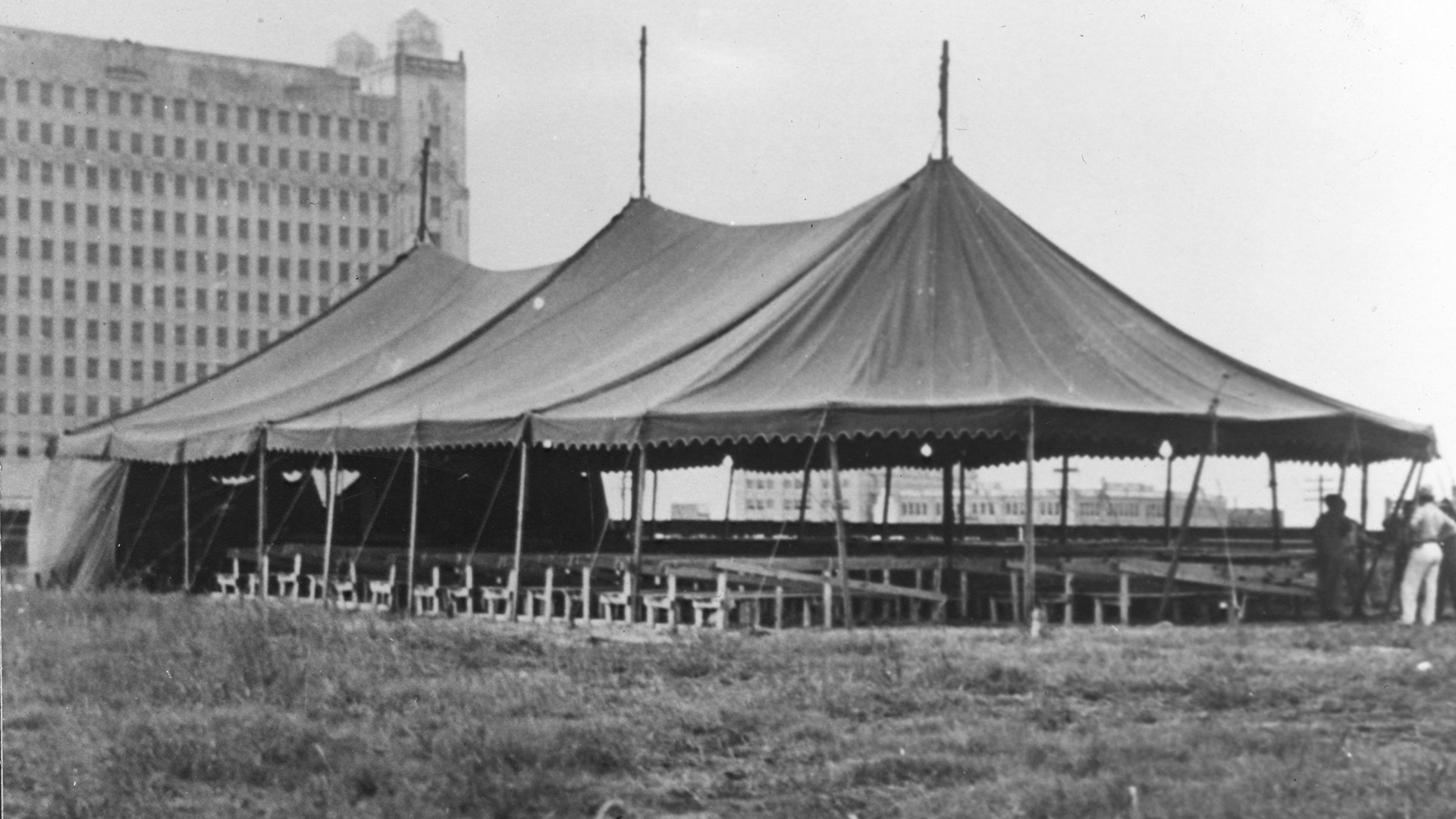
As funny as it may sound today, Young Life was once a tent ministry!
That’s right, some of the very first kid gatherings happened in circus-sized tents. In the early part of the 20th century, summer tent revivals were extremely popular. Young Life’s founder, Jim Rayburn, whose father was a traveling evangelist, adopted the large crowd approach and adapted the revival message for teenagers.
In 1940, he organized three summer tent meetings in Gainesville, Houston, and Dallas, Texas. Despite the sweltering Texas heat, the Young Life tent campaigns were a huge success in introducing thousands of teenagers to Jesus.
These tent revivals, however, posed a problem. Continuing the ministry in Gainesville, Houston, and Dallas demanded that these Dallas Seminary students must travel long hours every week to lead the fledgling club meetings (Dallas to Houston alone is three and a half hours one way). This was pretty much the only time the leaders would interact with the students.
As a result, the weekly ministry might be better termed weakly ministry. Spiritual growth in the kids, needless to say, was lacking.
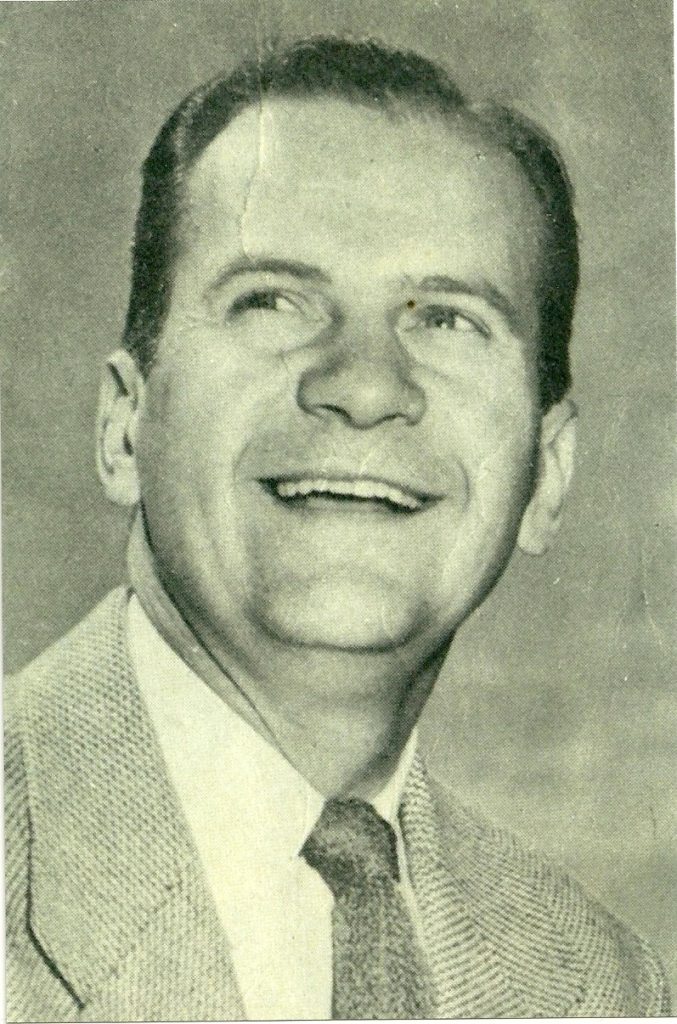
It was in this season that Add Sewell, one of those seminary students (who in 1941 would become one of the first five Young Life staff), moved to Tyler, Texas, to start the ministry there. Here he changed the course of Young Life history simply by doing what came naturally. He was well aware the work there must run differently than the earlier “appearances” he and his fellow seminarians made in their weekly commutes.
“You can’t have a Young Life club like that,” Add said. “We had no contact with kids prior to or after those clubs.”
Add knew the missing ingredient was time. Young Life club meetings, while filled with energy, laughter, music, and the message, could never be the lifeblood of outreach work to kids.
They needed adults who cared enough to come alongside them and spend time learning what was important to them.
Looking for a better approach with the ministry in Tyler, Add started showing up at football practices, where he simply hung out and kicked the football around with the players. In the process, he developed relationships with kids — exactly what he saw missing in the weekly trips.
Add’s simple “discovery,” which came to be known as “contact work,” helped enlarge the staff’s vision of what kids (and adults) needed. Since that time, Young Life leaders all over the world have made it “priority one” to hang out where the kids are:
- Meeting them after school in their hallways in Michigan
- Attending their football games in California
- Kicking a soccer ball with them down a dusty street in Ethiopia
- Watching their marching band practices in Maryland
- Getting sodas at a mall in Indiana
- Braving a skate park together in London
- Hosting English classes for them in Thailand
And the possibilities are limitless …
Of course, we know Add wasn’t the original inventor of “contact work.” That title belongs to Someone with a far greater résumé!
Wally Howard, who was also one of the first five staff, was quick to point out that contact work was actually a very old concept. “Our message is a person. God made himself known to us through a Person. And he still makes himself known through people. And that’s what Young Life’s all about.”
This slow, patient practice of hanging out with kids in order to build relationships ultimately became the very fiber of the ministry. Of course, at the time Add was just doing what came naturally. “I think I was the first one to do it in Young Life, and to do it pretty intensively, but that was my strength. I was not a great speaker in the Young Life club.”
This sentiment is a profound encouragement to all Young Life leaders who’ve ever felt their greatest abilities lie in the simple (but essential) task of being with kids.
It leads us to ask:
- Where have you been the beneficiary of someone doing “contact work,” even if they didn’t define it that way?
- Where are you doing “contact work” already? Where are the spaces where you show up naturally?
- What might happen if you looked for ways to multiply your impact through “contact work”? This might not be with kids, but co-workers, folks at a coffee shop, all sorts of places!
- “Our message is a person…and [God] still makes himself known through people.” How are you making God known? And who’s making God known to you?
Some of this content was originally published in the book, Made For This: The Young Life Story.